React Native最终展示的UI全是Native的UI,将Native的信息封装成React方便的调用。那么Native是如何封装成React调用的?Native和React是如何交互的?
UI组件:将Native的UI暴露出来供JS调用。
Native组件封装成JS组件供JS调用。这里的一个问题是怎么将Native中的属性用在JS中,以及属性可以有哪些类型的?可以先思考一下。下面Native的代码自定义了一个View并定义了一个变化的属性color。
public class MyCustomView extends View { PRivate Paint mPaint; public MyCustomView(ReactContext context) { super(context); mPaint = new Paint(Paint.ANTI_ALIAS_FLAG); mPaint.setColor(0xffff0000); } // 这里相当于可以改变color属性 public void setColor(int color){ mPaint.setColor(color); invalidate(); } @Override protected void onMeasure(int widthMeasureSpec, int heightMeasureSpec) { super.onMeasure(widthMeasureSpec, heightMeasureSpec); // 测试代码,onMeasure中设置的值通过getWidth()/getHeight()拿到的不一样,问题没找到 setMeasuredDimension(300, 300); } @Override protected void onDraw(Canvas canvas) { super.onDraw(canvas); canvas.drawRect(0, 0, getWidth(), getHeight(), mPaint); }}创建一个ViewManager。
public class MyCustomViewManager extends SimpleViewManager<MyCustomView> { protected static final String REACT_CLASS = "MyCustomView"; @Override public String getName() { // 返回了定义的View Module的名字 return REACT_CLASS; } @Override protected MyCustomView createViewInstance(ThemedReactContext reactContext) { return new MyCustomView(reactContext); // 创建一个View实例供JS使用。 } // 设置属性,一定需要加这个注解,不然不认识 @ReactProp(name = "color") public void setColor(MyCustomView view, String color) { view.setColor(Color.parseColor(color)); }}创建一个ReactPackage,并在application中使用。
public class CustomReactPackage implements ReactPackage { @Override public List<NativeModule> createNativeModules(ReactApplicationContext reactContext) { return Collections.emptyList(); } @Override public List<Class<? extends javaScriptModule>> createJSModules() { return Collections.emptyList(); } // 自定义的ViewManager都可以加在这里。 @Override public List<ViewManager> createViewManagers(ReactApplicationContext reactContext) { return Arrays.<ViewManager>asList( new MyCustomViewManager() ); }}在Application中使用ReactPackage。
public class MainApplication extends Application implements ReactApplication { private final ReactNativeHost mReactNativeHost = new ReactNativeHost(this) { @Override public boolean getUseDeveloperSupport() { return BuildConfig.DEBUG; } @Override protected List<ReactPackage> getPackages() { return Arrays.<ReactPackage>asList( new MainReactPackage(), new CustomReactPackage() // 把自定义的ReactPackage加进来 ); } }; @Override public ReactNativeHost getReactNativeHost() { return mReactNativeHost; } @Override public void onCreate() { super.onCreate(); SoLoader.init(this, /* native exopackage */ false); }}将Native组件封装成JS组件。
import React, { Component, PropTypes,} from 'react';import { requireNativeComponent, View, UIManager,} from 'react-native';const ReactNative = require('ReactNative'); // ReactNative通过import没用export default class MyCustomView extends Component{ constructor(props){ super(props) } render(){ // {...this.props} 一定需要设置,不让你永远也看不到 return( <RCTMyCustomView {...this.props} </RCTMyCustomView>); }}MyCustomView.propTypes = { color: PropTypes.string, // 设置color属性 ...View.propTypes, // 这里一定需要设置,不然会报错。has no propType for native prop。这个被坑了};var RCTMyCustomView = requireNativeComponent('MyCustomView', MyCustomView); // 拿到Native组件然后就可以愉快的使用了。(最开始没有设置大小,只是在Native的onMeasure中设置了大小,一直没有View出来,被坑了)
// 一定需要设置大小,不然永远看不到。<MyCustomView color='#00ff00' style={{width:300, height:300}}/>如果是第一次使用封装UI Component的话,自己一定需要完整的尝试一遍。
交互。Native将事件传递给JS、JS将事件传递给Native。想一下这样一个场景,点击了Native以后,JS怎么知道Native被点击了?以及JS能否告诉Native需要干什么?当然需要了,并且React Native已经封装的很好了。在上面的MyCustomViewManager中实现一些方法就可以了。getCommandsMap()和receiveCommand()用来处理JS向Native发送事件逻辑。getExportedCustomDirectEventTypeConstants()和addEventEmitters()对应了Native向JS发送事件逻辑。
private static final int CHANGE_COLOR = 1; /** * 可以接收的JS发过来的事件,返回来的数据是一组对应了方法名以及方法对应的一个ID(这个ID需要唯一区分)的Map。 * 这个在进入App的时候就会运行,得到相应的一组Map。 */ @Nullable @Override public Map<String, Integer> getCommandsMap() { return MapBuilder.of("changeColor", CHANGE_COLOR); } /** * 接收JS事件以后的处理。JS会通过一些发送发送相应的指令过来,Native会由receiveCommand来处理。 * 事件过来时才会执行。 */ @Override public void receiveCommand(MyCustomView root, int commandId, @Nullable ReadableArray args) { switch (commandId) { case CHANGE_COLOR: root.changeColor(); break; } } /** * 暴露了在JS中定义的方法,例如下面的"onChangeColor"是定义在JS中的方法。 * 这个在进入App的时候就会运行 * * Returned map should be of the form: * { * "onTwirl": { * "registrationName": "onTwirl" * } * } */ @Nullable @Override public Map<String, Object> getExportedCustomDirectEventTypeConstants() { return MapBuilder.<String, Object>builder() .put("changeColor", MapBuilder.of("registrationName", "onChangeColor")) .build(); } /** * 发射入口,相当于将Native的一些事件也注册给JS。 * * 这个在进入App的时候就会运行。 */ @Override protected void addEventEmitters(final ThemedReactContext reactContext, final MyCustomView view) { super.addEventEmitters(reactContext, view); view.setOnClickListener(new View.OnClickListener() { @Override public void onClick(View v) { // 调用了JS相应的方法。 reactContext.getNativeModule(UIManagerModule.class).getEventDispatcher() .dispatchEvent(new ClickEvent(view.getId())); } }); }在上面的代码中可以看到Native会接受一个1(CHANGE_COLOR)的指令以及会回调一个onChangeColor的方法到JS。那么现在就在JS中实现,把完整的JS代码贴了一遍,注释也写在了里面。
const ReactNative = require('ReactNative');const CUSTOM_VIEW = "custom_view";export default class MyCustomView extends Component{ constructor(props){ super(props) this._onChange = this._onChange.bind(this); // 一定需要这样调用才会把属性绑定过来 } // 把事件给Native _changeColor() { // is not a function?没有设置this._onChange = this._onChange.bind(this);的时候 let self = this; UIManager.dispatchViewManagerCommand( ReactNative.findNodeHandle(self.refs[CUSTOM_VIEW]), 1, // 发送的commandId为1 null ); } _onChange() { if (!this.props.handleClick) { return; } this.props.handleClick(); } render(){ // 设置ref,没弄明白为什么一定需要设置ref,大概是_changeColor中的findNodeHandle需要 return( <RCTMyCustomView ref={CUSTOM_VIEW} {...this.props} onChangeColor={() => this._onChange()}> </RCTMyCustomView>); }}MyCustomView.propTypes = { handleClick: PropTypes.func, color: PropTypes.string, // 设置一个属性 ...View.propTypes,};var RCTMyCustomView = requireNativeComponent('MyCustomView', MyCustomView, { nativeOnly: {onChangeColor: true}});注意上面用到了nativeOnly。有时候有一些特殊的属性,想从原生组件中导出,但是又不希望它们成为对应React封装组件的属性。举个例子,Switch组件可能在原生组件上有一个onChange事件,然后在封装类中导出onValueChange回调属性。这个属性在调用的时候会带上Switch的状态作为参数之一。这样的话你可能不希望原生专用的属性出现在API之中,也就不希望把它放到propTypes里。可是如果你不放的话,又会出现一个报错。解决方案就是带上nativeOnly选项。(来自 http://reactnative.cn/docs/0.41/native-component-android.html#content)
现在就可以愉快的调用了。
<MyCustomView ref='view' color='#00ff00' handleSizeClick={() => this._handleSizeClick()} handleClick={() => this._handleClick()} style={{width:300, height:300}} />建议初学者好好的实践一遍。
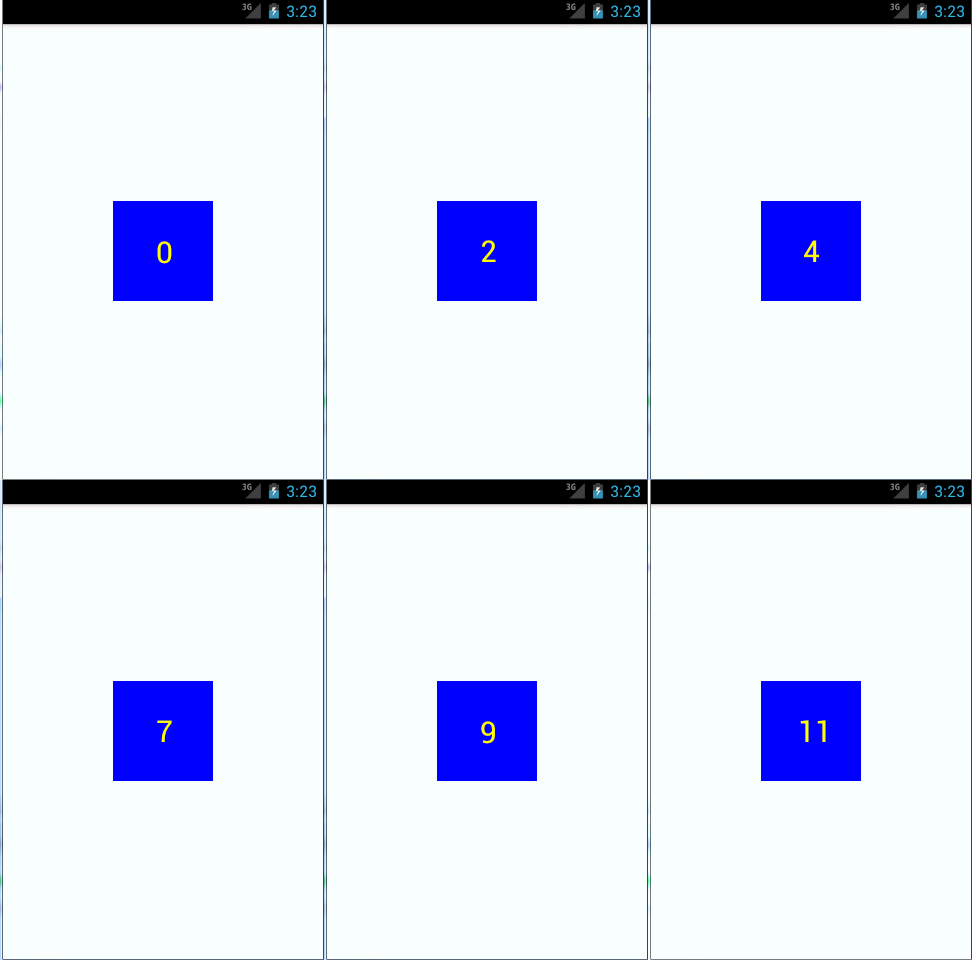
 最后的结果
最后的结果 Native模块:定义Native的模块供JS调用。这样的场景会比较的多,比如Toast,在JS中没有Toast这类东西,但是Android/IOS中却很常见。
JS调用Native组件封装一个moudle供JS调用。注意里面注释。
@ReactModule(name = "DemoToast")public class DemoToastModule extends ReactContextBaseJavaModule { private static final String DURATION_SHORT_KEY = "SHORT"; private static final String DURATION_LONG_KEY = "LONG"; public DemoToastModule(ReactApplicationContext reactContext) { super(reactContext); } // Module的名称 @Override public String getName() { return "DemoToast"; } /** * 这里定义的值可以被JS中引用,JS引用的时候.SHORT就会对应到相应的Toast.LENGTH_SHORT */ @Nullable @Override public Map<String, Object> getConstants() { final Map<String, Object> constants = new HashMap<>(); constants.put(DURATION_SHORT_KEY, Toast.LENGTH_SHORT); constants.put(DURATION_LONG_KEY, Toast.LENGTH_LONG); return constants; } /** * 通过Callback回调到JS */ @ReactMethod public void show(String message, int duration, Callback callback) { Toast.makeText(getReactApplicationContext(), message, duration).show(); callback.invoke("Egos"); }}JS将Native module转化成JS组件。
import { NativeModules } from 'react-native';RCTDemoToast = NativeModules.DemoToast; // 获取到Native Modulevar DemoToast = { /** * 觉得这里不是很好理解,但是这里对应的那个值(SHORT或者LONG)确实 * 是对应了上面Java代码中的getConstants对应的信息。 */ SHORT: RCTDemoToast.SHORT, LONG: RCTDemoToast.LONG, show(message, duration){ RCTDemoToast.show(message, duration, (msg) => { var str = msg; }); }};module.exports = DemoToast;交互。Native回调信息给JS。 @ReactMethod public void show(String message, int duration, Callback callback) { Toast.makeText(getReactApplicationContext(), message, duration).show(); callback.invoke("Egos"); // callback回调信息。注意上面的RCTDemoToast.show方法第三个参数。 }在JS中注册testMethod。Native直接调用JS。
componentWillMount() { DeviceEventEmitter.addListener('testMethod', (event) => {var s = event;} );}下面Native代码发送指令就会执行上面代码。
WritableMap params = Arguments.createMap();params.putString("xixi","Egos");sendEvent(getReactApplicationContext(), "testMethod", params);/*** 也可以直接发送事件给JS代码*/private void sendEvent(ReactContext reactContext, String eventName, @Nullable WritableMap params) { reactContext.getJSModule(DeviceEventManagerModule.RCTDeviceEventEmitter.class).emit(eventName, params); // 会回调到上面注册的testMethod。}JS模块:com.facebook.react.CoreModulesPackage中有展示出来一些信息,AppRegistry、RCTEventEmitter(对应了RCTNativeAppEventEmitter)等等。
 源码中定义的JS Module
 Native Modules
Native UI Components
React Native中文网
新闻热点






疑难解答